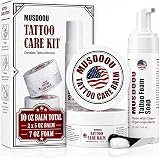
Many tattoo enthusiasts invest significant time, money, and thought into their body art. The initial thrill of a crisp, vibrant new tattoo is undeniable, but the challenge lies in preserving that aesthetic for years to come. In the accompanying video, the host shares practical, actionable steps she takes to maintain her tattoos looking fresh and vibrant, even after years. This deep dive expands on those critical insights, offering an expert perspective on the science and strategy behind long-term tattoo preservation, ensuring your intricate designs remain as striking as the day they were inked.
The Foundation: Precision Artistry and Optimal Tattoo Care
Before any aftercare regimen can take effect, the indelible quality of a tattoo begins with the artist. The host rightly emphasizes this foundational element, highlighting her experience with Jennifer Lawes. A skilled tattoo artist employs techniques that ensure clean lines, proper pigment saturation, and minimal trauma to the dermis. This initial quality significantly influences how well a tattoo ages. Imagine if the ink isn’t deposited uniformly; fading becomes inherent, regardless of external care.
However, even masterfully applied tattoos require diligent stewardship. The interaction between your skin and the environment dictates the longevity of the artwork. The skin, as the body’s largest organ, is a dynamic canvas, constantly regenerating, responding to stimuli, and aging. Understanding this biological reality is crucial for maintaining tattoo vibrancy.
Hydration: The Unsung Hero for Vibrant Tattoos
The video’s first, and arguably most impactful, tip is consistent moisturizing. This isn’t merely a cosmetic gesture; it’s a fundamental aspect of epidermal health that directly impacts how tattoos looking fresh present themselves. The outermost layer of your skin, the stratum corneum, acts like a protective barrier. When this barrier is well-hydrated, it’s supple, smooth, and reflects light evenly. Conversely, dehydrated skin appears dull, flaky, and can obscure the underlying tattoo pigment.
Consider the skin as a window pane over a masterpiece. If that pane is smudged, dusty, or cracked, the art beneath cannot be truly appreciated. Similarly, dry skin cells on the epidermis scatter light erratically, making tattoo colors appear muted and lines less defined. Regular moisturization helps to:
- Enhance Skin Elasticity: Supple skin accommodates the natural movement of the body, reducing the likelihood of micro-creases that can distort tattoo lines over time.
- Improve Light Reflection: A smooth, hydrated surface allows light to penetrate and reflect more uniformly, making tattoo colors appear richer and more saturated.
- Support Skin Barrier Function: A healthy skin barrier is less prone to irritation, dryness, and environmental damage, all of which can compromise tattoo integrity.
The host recommends moisturizing at least once daily, potentially twice in drier climates or seasons. Products like Aveeno, Weleda Skin Food, CeraVe Moisturizing Lotion, Lush Ultrabalm, and Lush Elbow Grease are cited for their efficacy. These formulations typically contain humectants (like glycerin or hyaluronic acid) that draw moisture into the skin, and emollients (such as ceramides or fatty acids) that smooth and soften the skin, along with occlusives (like petrolatum or shea butter) that form a protective barrier to prevent moisture loss. A well-formulated moisturizer is a cornerstone for any serious tattoo care regimen.
Shielding Your Art: Advanced Sun Protection Strategies
Of all the environmental aggressors, ultraviolet (UV) radiation is arguably the most destructive for tattoos. As the host emphatically states, “The sun is the destroyer of skin, but especially tattoos.” UV light directly targets the ink pigments, breaking them down into smaller particles that the body’s immune system can then more easily absorb and eliminate. This process leads to gradual fading, blurring, and a noticeable loss of detail, even making tattoos looking fresh a distant memory.
Understanding the two primary types of UV radiation is vital:
- UV-A Rays: These rays penetrate deeper into the skin, contributing to collagen degradation, premature aging, and long-term fading of tattoo pigments.
- UV-B Rays: Primarily responsible for sunburn, these rays can also cause immediate damage to the epidermis, leading to inflammation and compromised skin integrity around the tattoo.
Effective sun protection for tattooed skin goes beyond mere sunscreen application:
- Strategic Sun Avoidance: The host’s advice to avoid direct sun exposure between 10 a.m. and 2 p.m. is based on sound dermatological principles. This is when UV radiation is at its most intense.
- Broad-Spectrum SPF: Always opt for a broad-spectrum sunscreen with an SPF of 30 or higher. “Broad-spectrum” indicates protection against both UV-A and UV-B rays. Sunscreen needs to be reapplied every two hours, or more frequently after swimming or heavy sweating. Products like Supergoop! and Neutrogena stick sunscreens are mentioned for their non-pasty formulations, avoiding the dreaded white cast.
- UPF Clothing: An increasingly popular and effective method of sun protection is wearing apparel with a Ultraviolet Protection Factor (UPF) rating. UPF clothing provides a measurable barrier against UV radiation, often outperforming standard fabrics. For example, a UPF 50 fabric blocks 98% of the sun’s rays, allowing only 2% to penetrate. This is particularly useful for large tattoo areas like sleeves or back pieces.
- Consider Tattoo Location: Hand tattoos, as highlighted in the video, are notoriously difficult to protect due to constant exposure and frequent washing. Consistent, diligent application of SPF is non-negotiable for these areas.
- Enhanced Clarity: By removing the superficial layer of dull, dead skin, exfoliation reveals the fresher, more vibrant skin beneath, allowing the tattoo pigments to appear brighter and more defined.
- Improved Product Absorption: A clear skin surface allows moisturizers and other skincare treatments to penetrate more effectively, maximizing their benefits.
- Prevention of Ingrown Hairs: As a bonus, exfoliation is crucial for preventing ingrown hairs, especially for those who regularly remove hair.
Regarding the host’s query about SPF 100 versus SPF 50, current research suggests that while SPF 100 technically blocks a slightly higher percentage of UV rays (99% vs. 98% for SPF 50), the difference is marginal. The critical factor remains consistent and correct application, along with reapplication. A higher SPF should not be an excuse for longer sun exposure or less frequent reapplication.
Refining the Canvas: Hair Removal and Exfoliation
Two additional techniques, though perhaps less obvious than moisturizing and sun protection, contribute significantly to the visual clarity of tattoos: hair removal and exfoliation.
Hair Removal: Unveiling the Art
The presence of even fine hair over a tattoo can subtly diminish its sharpness and vibrancy. Hair, particularly if it’s dark or dense, can create a visual “veil” that obscures the intricate details and overall color saturation of the artwork. The host’s observation that her tattoos look so much more crisp without hair is a testament to this. Methods such as epilation, as mentioned by the host, waxing, or laser hair removal can create a smoother canvas, allowing the tattoo’s lines and colors to stand out with greater clarity. While not a physiological necessity for tattoo health, it is a significant aesthetic enhancement.
Exfoliation: Renewing the Surface
Exfoliation is the process of removing dead skin cells from the epidermis. Our skin naturally sheds dead cells, but this process can slow down due to age, environmental factors, or product buildup. A layer of dead, dull skin cells can accumulate on the surface, similar to a frosted window, diminishing the brightness and definition of a tattoo. The host’s recommendation to exfoliate once or twice a week using a product like Ole Henriksen’s Transforming Walnut Scrub is highly beneficial.
The benefits of exfoliation for tattooed skin include:
When choosing an exfoliant, consider both physical (scrubs, brushes) and chemical (AHAs, BHAs) options. For tattooed skin, gentle formulations are key to avoid irritation. Over-exfoliation can compromise the skin barrier, leading to sensitivity and dryness, which is counterproductive to tattoo care. The goal is gentle renewal, not harsh stripping.
Embracing the Journey: Lifelong Care and Acceptance
Ultimately, while these strategies significantly extend the life and vibrancy of tattoos, it’s essential to acknowledge the natural process of aging. Skin will inevitably wrinkle, lose elasticity, and undergo changes. Tattoos, being an integral part of the skin, will also evolve. However, proactive care not only preserves the aesthetic quality of the tattoos but also encourages overall skin health, as the host beautifully notes. The practices that keep tattoos looking fresh—moisturizing, sun protection, and exfoliation—are universally beneficial for the entire body’s skin, promoting a holistic approach to self-care.
Keeping Your Ink Pristine: Your Q&A
What is the most important first step to ensure a tattoo looks good for a long time?
The quality of a tattoo starts with a skilled artist who applies the ink correctly. This foundational work significantly impacts how well your tattoo will age.
Why should I moisturize my tattoos regularly?
Moisturizing keeps your skin hydrated, making your tattoo colors appear richer and its lines more defined. Dry skin can make tattoos look dull and muted.
How does the sun affect tattoos?
The sun’s UV rays are very damaging to tattoos, breaking down the ink pigments and causing them to fade and blur over time, losing their original vibrancy.
What are the best ways to protect my tattoos from sun damage?
Always use a broad-spectrum sunscreen with SPF 30 or higher on your tattooed skin. You can also wear UPF (Ultraviolet Protection Factor) clothing and try to avoid direct sun exposure during peak hours.
Why would someone remove hair or exfoliate skin over a tattoo?
Removing hair and gently exfoliating helps reveal the clearer, brighter skin beneath. This makes the tattoo’s colors and details stand out more sharply.